
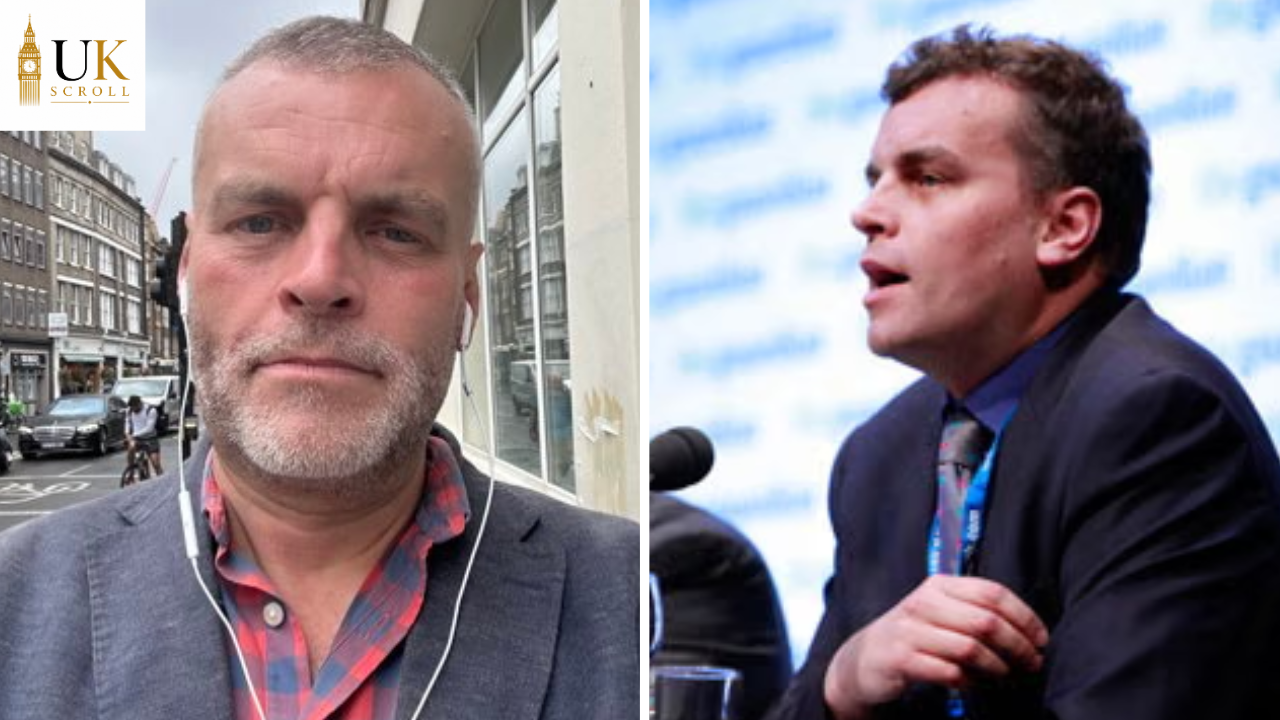
Tim Montgomerie illness is a search term that has attracted attention from people who want to understand whether the British political commentator and ConservativeHome founder has faced a serious health condition. Because health information is personal and online discussions can easily turn into speculation, it is important to separate confirmed information from rumors, assumptions, and unsupported claims.
Tim Montgomerie is a well-known figure in British political journalism and commentary. He founded ConservativeHome and has worked in several influential roles connected with Conservative politics and political media. Over the years, his public appearances, commentary, and social-media activity have led some readers to search for information about his personal circumstances, including his health.
However, there is a major difference between a person’s public profile and their private medical history. Unless a health condition has been clearly disclosed by the individual or reported by a reliable source, it should not be presented as fact.
This article examines what can responsibly be said about Tim Montgomerie illness, why searches about his health may appear online, how to evaluate claims about his medical condition, and what is known about his professional background.
Who Is Tim Montgomerie?
Tim Montgomerie is a British political commentator, campaigner, and writer who has played a significant role in Conservative political media.
He is particularly associated with ConservativeHome, a website he founded in 2005. The publication became an important platform for Conservative Party members, activists, politicians, and political observers.
Montgomerie later moved into mainstream political journalism and broadcasting. His career has included senior editorial and political roles, giving him a prominent position in discussions about British politics.
He has also been involved in political campaigning and policy debates, particularly around Conservative ideas, elections, government policy, and the relationship between politicians and voters.
Because of his long public career, information about Montgomerie is frequently searched online. At the same time, his visibility has occasionally resulted in searches about aspects of his personal life that may not have been publicly documented.
Is Tim Montgomerie Ill?
There is no reliable basis for assigning a specific medical diagnosis to Tim Montgomerie without a verified public disclosure or reputable reporting.
This distinction matters. Searches for phrases such as “Tim Montgomerie illness” do not automatically prove that the person has a particular disease or serious medical condition.
People sometimes search for an illness-related keyword after:
- Noticing a change in someone’s public appearances
- Seeing an unverified social-media post
- Reading an online discussion
- Encountering an old article
- Misinterpreting a person’s absence from television or events
- Looking for an explanation for a personal or professional change
None of these circumstances establishes a medical diagnosis.
A responsible article should therefore avoid turning online curiosity into an unsupported health claim.
What Is Publicly Known About Tim Montgomerie’s Health?
Public figures do not automatically have to disclose their medical histories. Unless an individual chooses to make health information public, there may be very little verified information available.
For Tim Montgomerie, readers should be cautious about websites or social-media accounts that claim to identify a disease without providing a credible source.
A trustworthy health-related claim should ideally trace back to one of the following:
- A direct statement from Tim Montgomerie
- A verified interview
- A reputable news organization
- An official statement
- A clearly documented public announcement
If a claim cannot be traced to a reliable source, it should be treated as unconfirmed.
Why the Lack of Information Matters
The absence of publicly available medical information does not mean that a person is healthy or unhealthy. It simply means that there is insufficient verified information to make a responsible conclusion.
This is especially important with medical topics because inaccurate claims can spread quickly and can unfairly affect a person’s reputation.
Why Are People Searching for “Tim Montgomerie Illness”?
Search interest can develop for many reasons, and the keyword itself does not reveal the reason behind the search.
Google users may type a person’s name together with words such as “illness,” “health,” “disease,” or “condition” because they have encountered something they do not understand.
For a public figure, this can happen when:
- Their public appearances become less frequent.
- An old interview resurfaces.
- Social-media activity changes.
- A website publishes an unsupported claim.
- Other users begin discussing their health.
- Search engines suggest health-related terms.
- Readers confuse two people with similar names.
It is therefore important not to treat search volume as evidence.
Tim Montgomerie’s Professional Career
Understanding Montgomerie’s career provides useful context for why his name remains prominent in British political discussions.
ConservativeHome
One of Montgomerie’s most notable achievements was establishing ConservativeHome.
The website was created as a platform focused on the Conservative Party and its supporters. It became known for publishing political commentary, polling information, interviews, and views from Conservative activists and politicians.
ConservativeHome eventually developed a significant influence within political circles.
Political Journalism
Montgomerie later expanded his work into mainstream journalism.
His career included a period at The Times, where he served as a political commentator and held an editorial role. His writing and political analysis helped make him a recognizable voice beyond the Conservative grassroots movement.
Campaigning and Political Ideas
Montgomerie has also been associated with political campaigns and policy discussions.
His public work has frequently focused on issues such as:
- Conservative Party strategy
- Elections
- Political leadership
- Social policy
- Economic policy
- Political communication
- Voter attitudes
- Government reform
This long history explains why his name continues to appear in political reporting and online searches.
Has Tim Montgomerie Publicly Discussed a Medical Condition?
When researching Tim Montgomerie illness, it is important to distinguish between a person’s own statements and information repeated by third parties.
If Montgomerie has not clearly confirmed a particular diagnosis in a reliable public source, readers should not assume that online claims are accurate.
A medical condition should not be attributed to a public figure simply because:
- A forum mentions it
- A social-media user claims it
- A low-quality blog repeats it
- A search-engine result displays the term
- Someone speculates about their appearance
- A video title makes an unsupported claim
These sources can be misleading.
Health information should be handled with considerably more care than ordinary celebrity gossip because medical claims can be sensitive and potentially harmful.
Tim Montgomerie Illness Rumors vs. Verified Information
One of the easiest ways to understand this topic is to separate evidence from speculation.
| Type of information | How it should be treated |
|---|---|
| Direct statement from Tim Montgomerie | Strong evidence |
| Reputable interview quoting him | Strong evidence |
| Established news organization with named sources | Potentially reliable, but verify |
| Anonymous social-media post | Unverified |
| Online forum discussion | Speculation |
| Blog without sources | Unverified |
| Search-engine suggestion | Not evidence |
| Claims based only on appearance | Not reliable evidence |
This approach helps readers avoid accidentally spreading misinformation.
Why Medical Privacy Is Important
Medical information is among the most personal information a person can have.
Being a public figure does not mean someone has surrendered their right to privacy. Political commentators, journalists, actors, athletes, and other public figures can have professional lives that are highly visible while keeping their medical information private.
There is also a practical reason to avoid speculation.
A false illness claim can:
- Cause unnecessary concern among family and supporters
- Damage a person’s reputation
- Be repeated by other websites
- Appear in search results for years
- Create confusion about unrelated information
For these reasons, responsible reporting should always prioritize evidence.
How to Verify Claims About Tim Montgomerie’s Health
If you encounter a claim about Tim Montgomerie’s health, checking the source is the best first step.
Look for the Original Source
Do not rely solely on a website that says another website reported something.
Try to locate the original interview, statement, article, or announcement.
Check the Date
Old information can easily be presented as current information.
A story from several years ago may have nothing to do with a person’s circumstances today.
Look at the Publisher
Established news organizations generally have clearer editorial standards than anonymous websites.
That does not mean every published claim is automatically correct, but the source provides an important starting point for verification.
Avoid Diagnosis by Appearance
A person’s appearance, voice, weight, energy level, or absence from an event cannot reliably establish a medical diagnosis.
Only appropriate medical evaluation can establish most health conditions.
Does Tim Montgomerie’s Career Tell Us Anything About His Health?
Not necessarily.
A person’s professional activity can change for many reasons unrelated to illness.
For example, someone may:
- Change careers
- Take time away from public life
- Work behind the scenes
- Reduce media appearances
- Focus on writing
- Spend more time on personal projects
- Change their political priorities
Consequently, a change in professional visibility should not automatically be interpreted as a health problem.
The Difference Between Health News and Online Speculation
Health reporting should follow a higher standard than ordinary internet discussion.
A responsible health article should answer three basic questions:
Who said it?
Readers should know where the information originated.
When was it said?
Health information can change over time, and old reports may no longer reflect current circumstances.
What evidence supports it?
A credible claim should have identifiable evidence rather than relying on assumptions.
When these questions cannot be answered, the information should be labeled unconfirmed.
Tim Montgomerie’s Public Profile in British Politics
Regardless of questions surrounding his health, Montgomerie’s influence on Conservative political discussion is well established.
His creation of ConservativeHome gave Conservative activists and members a dedicated online platform during a period when political blogging and digital campaigning were becoming increasingly important.
The site helped create a direct channel between party members and political commentators. This was particularly significant because traditional political journalism often focused more heavily on Westminster politicians and senior party figures.
Montgomerie’s later journalism further expanded his influence.
His career demonstrates how political communication changed significantly during the early years of online media. Political websites, blogs, polling analysis, and social-media discussion gradually became central to how parties communicated with supporters.
Why Reliable Sources Matter for Health Searches
Search engines are designed to help users find information, but search results can contain content of very different quality.
A page ranking for an illness-related search term does not necessarily mean that its claims have been medically or journalistically verified.
Readers should be especially cautious when an article:
- Uses sensational headlines
- Makes a diagnosis without a source
- Provides no publication date
- Cites anonymous social-media posts
- Repeats another website without checking the original source
- Uses dramatic language to generate clicks
- Claims to reveal a “secret” illness
These are common warning signs of unreliable health content.
What We Can Responsibly Say About Tim Montgomerie Illness
The safest conclusion is straightforward: there should be no specific illness attributed to Tim Montgomerie unless it has been publicly confirmed by a trustworthy source.
That does not mean that readers’ questions are unreasonable. Public figures naturally attract curiosity, especially when their public activities change.
However, curiosity and evidence are two different things.
If a verified statement about Montgomerie’s health becomes publicly available, it should be assessed using the same standards applied to any other medical claim.
Until then, readers should avoid treating rumors as established facts.
Frequently Asked Questions About Tim Montgomerie Illness
1. What is Tim Montgomerie illness?
There is no reliable basis for stating that Tim Montgomerie has a specific illness unless he or a reputable source has publicly confirmed one. Unverified online claims should not be treated as medical facts.
2. Who is Tim Montgomerie?
Tim Montgomerie is a British political commentator, campaigner, writer, and the founder of ConservativeHome. He has also worked in mainstream political journalism.
3. What is Tim Montgomerie best known for?
He is best known for founding ConservativeHome, an influential website focused on Conservative Party politics, members, policy, and political commentary.
4. Has Tim Montgomerie confirmed having a serious illness?
A specific serious illness should not be attributed to him without a clear and reliable public confirmation. Readers should distinguish verified statements from online speculation.
5. Why is Tim Montgomerie’s health being searched online?
Searches can arise from changes in public appearances, online discussions, old articles, social-media posts, or simple curiosity. Search interest itself does not establish that someone has a medical condition.
6. Is there an official diagnosis available online?
Readers should be cautious about websites claiming to provide a diagnosis. Unless the information comes from a verified public statement or reputable reporting, it should be considered unconfirmed.
7. Did Tim Montgomerie’s political career stop because of illness?
There is no reason to assume that a career change or reduction in public activity was caused by illness unless reliable evidence specifically establishes that connection.
8. Was Tim Montgomerie a journalist?
Yes. Montgomerie has worked in political journalism and commentary, including a notable role at The Times.
9. What is ConservativeHome?
ConservativeHome is a political website associated with the British Conservative Party and its supporters. Tim Montgomerie founded the site in 2005.
10. Should social-media posts about Tim Montgomerie’s illness be trusted?
Not automatically. Social-media posts can spread quickly without verification. A health claim should be checked against reliable sources before being accepted or repeated.
11. Can someone’s appearance prove they have an illness?
No. Appearance alone cannot establish a medical diagnosis. Many different factors can affect how someone looks or behaves at a particular time.
12. Why should illness rumors about public figures be treated carefully?
Medical rumors can cause unnecessary concern and can unfairly affect a person’s reputation. Health information should therefore be based on credible evidence.
13. Does being a public figure mean Tim Montgomerie must reveal his medical history?
No. Public figures can choose what personal information they disclose. Professional visibility does not remove someone’s right to medical privacy.
14. Where should readers look for verified health information?
The strongest sources are direct statements from the individual, reputable interviews, established news organizations, and official announcements.
15. Is every website mentioning Tim Montgomerie’s illness reliable?
No. Websites differ greatly in editorial standards. A claim should be checked for its source, date, evidence, and whether reputable publications independently support it.
16. Could old information be causing current searches?
Yes. Old articles, interviews, or social-media posts can resurface years later and generate new interest even when there is no new development.
17. Has Tim Montgomerie remained involved in political commentary?
His career has included extensive political commentary, journalism, campaigning, and analysis. His public profile is closely connected with British political debate.
18. What should readers do if they find a new illness claim?
Check whether the claim comes from Tim Montgomerie himself or a reputable source. Look for the original statement and publication date before accepting or sharing the information.
Final Thoughts
Interest in Tim Montgomerie illness reflects the wider public curiosity that often surrounds well-known political figures. However, health-related searches require a particularly careful approach.
Tim Montgomerie’s public career is well documented through his work as the founder of ConservativeHome, political commentator, campaigner, and journalist. His professional history can be discussed using established sources, but claims about a private medical condition require stronger evidence.
The key takeaway is simple: do not confuse online speculation with a confirmed diagnosis. If Tim Montgomerie publicly confirms health information in the future, reputable sources can provide appropriate context. Until then, responsible readers should rely on verified information and respect personal medical privacy.
For anyone researching the topic, the best approach is to check the original source, verify publication dates, compare reputable reports, and avoid repeating unsupported medical claims. This protects both the accuracy of the information and the privacy of the individual involved.
Also Read: Dan and Shay Tragedy: Complete Background, Facts, Rumors, and Latest Updates
About the Author








1 thought on “Tim Montgomerie Illness: What Is Publicly Known About His Health?”